
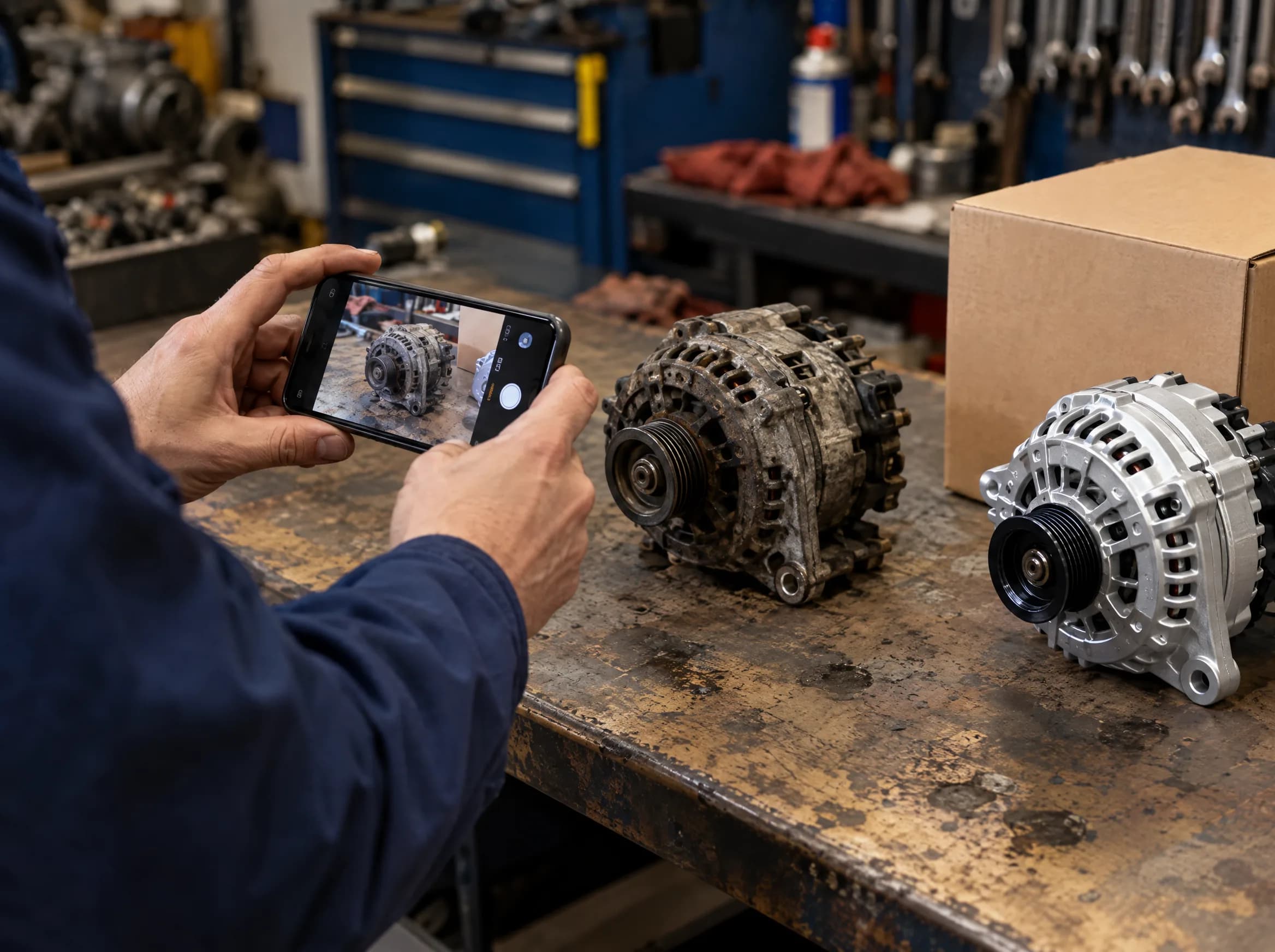
Ordering the wrong part costs a workshop a return trip, a delivery fee and an apology to the customer. Here's the five-point fitment check that gets it right before the part ever leaves the counter.
A part that doesn't fit costs more than the part. It costs the trip back to the counter, the delivery fee if it was couriered out, the hour the vehicle sat on the lift waiting, and the apology to a customer who now has questions about the whole job. Most wrong-part orders trace back to the same handful of shortcuts: going on the badge instead of the VIN, guessing the engine code, assuming two facelifts of the same model share a part. None of them take long to check properly. Here's the order to check them in.
Start with the VIN, not the model name
A "Kia Sportage" or a "Hyundai i20" isn't one car. It's several generations, at least one facelift inside most of those generations, and often two or three engine and transmission combinations sold under the same badge in South Africa. The vehicle identification number cuts through all of that. It's stamped on the chassis, printed on the windscreen sticker and on the registration documents, and it's the one thing that doesn't change no matter what the service book says. Read it off before you read anything else.
Match the engine code, not just the litres
"1.6 petrol" describes a class of engine, not a part number. The same displacement was often built in two or three distinct engine codes across a model's life, each with its own filter sizes, sensor placements and gasket shapes. The engine code is usually stamped on the block itself or listed on the VIN plate under the bonnet. Thirty seconds with a torch settles what would otherwise be a guess.
Photograph the old part before you order the new one
If the old part is still in your hands, it's the fastest fitment check available. A clear photo of the part number stamped or moulded into the housing, sent to your branch over WhatsApp, usually settles an order in one message, without back-and-forth over part descriptions or ordering from memory. This matters most on parts that look identical across model years but aren't: alternators, calipers, sensors and anything with a connector are the usual culprits.
Know your build date, not just your model year
"2019 model" can mean two different part specifications depending on whether the vehicle left the factory before or after a running change. South African dealers often sell a vehicle a full model year after it was built elsewhere, and manufacturers regularly run a mid-year facelift or spec update without renaming the model. The build date on the VIN plate is more reliable than the year on the registration papers.
An aftermarket part number isn't the same as an OEM number, and that's fine
Every branded aftermarket part carries its own manufacturer part number, separate from the vehicle maker's OEM number. That's normal: it's how cross-reference systems like TecDoc work, matching one OEM number to the correct aftermarket equivalent across multiple brands. Parts-Mall has held TecDoc Data Supplier status since 2013, which is what lets a branch counter cross-reference your OEM or old part number against the right PMC, NT, Car-Dex or Pomax equivalent in seconds, rather than guessing off a photo alone. Browse what's carried under each line in the full catalogue.
Don't assume shared platforms mean shared parts
Rebadged and shared-platform vehicles are common across the brands Parts-Mall supplies: related Hyundai and Kia models, and shared underpinnings across some Chevrolet, GWM and Ssangyong-era vehicles. A shared platform can still mean a different bracket, a different sensor, or a mirrored part number for the opposite side. "It's basically the same car" is a reason to double-check, not a reason to skip the check.
The five-point check, in order
VIN or chassis number, read directly off the vehicle, not the service book.
Engine code, confirmed from the block or the VIN plate, not the litre size alone.
Transmission type, manual or automatic, and the transmission code if the part touches the gearbox.
Build date from the VIN plate, checked against known facelift or running-change points.
OEM or original part number, if the old part is still available to check or photograph.
None of this needs to slow an order down. Call your nearest Parts-Mall branch with the VIN and, if you have it, a photo of the old part, and the counter team will confirm fitment before anything leaves the shelf. If the part number on the box doesn't match what you expected, don't assume it's wrong. Cross-reference it with the counter, or read our guide on spotting a counterfeit part before you fit anything you're unsure of.