
Grinding when you brake, a clunk over bumps, a hum that rises with speed. Here is what each noise usually means and which part to check first.
A grinding noise when you brake, a clunk over speed bumps, a hum that rises and falls with speed. Cars usually announce a worn part well before it fails, and the sound is often the best clue to which part it is. This guide covers the noises workshops and owners ask about most, what each usually points to, and which part to check first. It is general guidance. A proper inspection on a lift is what confirms the diagnosis, and anything involving brakes or steering should not be left waiting.
Brake noises and what they mean
A high-pitched squeal when braking
Most brake pads carry a small metal wear indicator that touches the disc and squeals when the friction material is getting thin. Squealing can also come from glazed pads or from dust and moisture, especially first thing in the morning. If it is constant, have the pads measured. A typical rule is to replace them once the friction material reaches about 3mm, or sooner if the wear sensor light comes on.
A grinding or scraping noise when braking
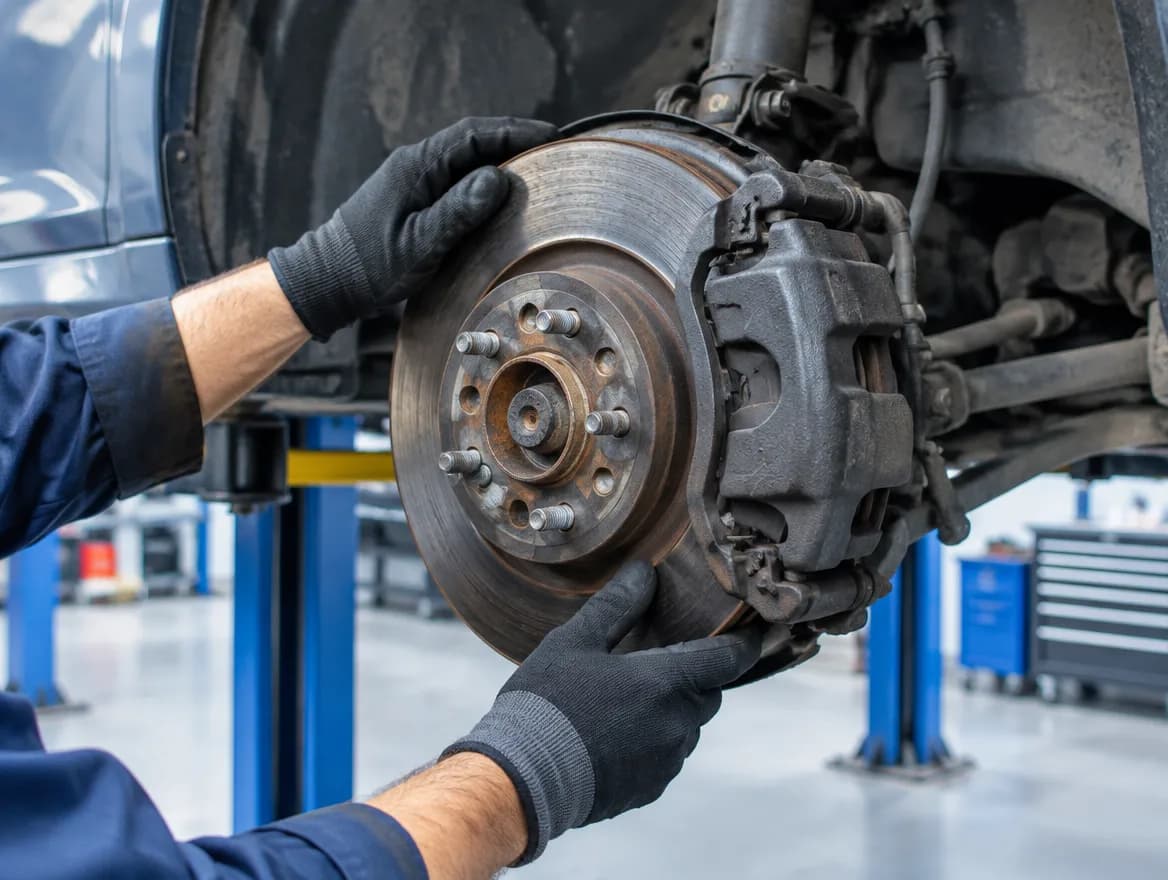
Grinding usually means the pad material is gone and the metal backing plate is cutting into the disc. Stop driving it if you can. The longer it continues, the more it costs, because the disc is being destroyed as well. Replace pads and check the discs against their stamped minimum thickness. If a disc is below minimum, scored, or has a lip on the outer edge, replace discs in axle pairs. See brake pads and brake discs.
A pulsing pedal or a shaking steering wheel under braking
That's typically a disc with uneven thickness or surface, felt through the pedal or the steering wheel. Discs are normally the first thing to check, and a worn wheel bearing or loose suspension joint can add to the shake.
The car pulls to one side when braking
A sticking brake calliper or uneven pad wear on one side is the usual cause. Pad shape follows the calliper, so note which calliper your car has before ordering pads.
A soft or sinking brake pedal
This one is not a wait-and-see item. A pedal that feels spongy or slowly sinks points to a hydraulic problem such as a leak or air in the system. Get the car inspected the same day and avoid driving it in the meantime.
Clunks and knocks from the suspension
South African road surfaces are hard on suspension, and branches in regions with poorer roads carry deeper stock on bushes, ball joints and shock mountings for exactly that reason. The pattern of the noise tells you where to start.
A dull clunk over speed bumps and potholes. Start with stabiliser links and bushings, which are among the most common and least expensive causes. Then check ball joints and control arms.
A knock when turning at low speed. Suspect ball joints or tie rod ends.
Vague or wandering steering and uneven tyre wear. Worn tie rod ends or rack ends, or an alignment that has drifted because a joint has worn.
A simple check on a lifted wheel is to grip it at the top and bottom and rock it, then at the sides. Movement points to a worn ball joint, a wheel bearing or a tie rod end. Treat a worn ball joint seriously. If one separates, the wheel can collapse, so it is not a part to drive on for months.
A humming or growling noise that changes with speed
A wheel bearing that is wearing usually produces a hum or growl that gets louder with speed. It often changes when you steer, because turning shifts the load onto one side. If the noise is loudest when you swing the wheel one way, the bearing on the opposite side is the one to check. Worn or cupped tyres can sound very similar, so rotate or inspect the tyres before you condemn the bearing. Some vehicles use a complete hub bearing assembly rather than a separate bearing, and the branch will confirm which yours takes.
A squeal from the front of the engine
A squeal on start-up or when you turn the steering to full lock is commonly a loose or worn drive belt. If the battery light comes on with it, check the belt and the alternator it drives. Do not ignore it. On many engines the same belt drives the water pump, and when it goes you lose charging, power steering and possibly cooling.
The wear items that never make a noise
Filters give little warning. Replace the oil filter with every oil change, following your service book and shortening the interval for dusty roads, short trips and heavy loads. A clogged air filter costs power and fuel, a blocked cabin filter means weak airflow and a musty smell, and a restricted fuel filter shows up as hesitation under load. Browse the filters range.
When to stop driving
Grinding brakes, or a pedal that is soft or sinking.
A clunk combined with loose, vague steering.
Any wobble or shake that gets worse with speed, or a wheel that moves when rocked.
A battery light with a squealing or missing belt.
What to tell the counter when you order
Say which wheel or axle, when the noise happens (braking, turning, over bumps, at speed) and give the VIN and engine code. Brakes and suspension parts are normally replaced in axle pairs, so ask for both sides. A photo of the old part on WhatsApp usually settles fitment in one message. For the full ordering routine, use our fitment checklist, then find your nearest branch.
Common questions about car noises and worn parts
Why are my brakes still squealing after new pads?
New pads sometimes squeal while they bed in, and noise can also come from a glazed disc, missing anti-squeal hardware or pads fitted to a disc that was not checked. If it continues after a few days of normal driving, take the car back to the workshop that fitted them.
How long do brake pads last?
There is no fixed interval. Front pads on a car used mostly in town typically last 30,000 to 50,000 km, but towing, hills and heavy loads shorten that considerably. Measure them rather than waiting for a noise.
Is a humming noise always a wheel bearing?
No. Uneven tyre wear and some tyre tread patterns produce a similar hum. Check the tyres first, then lift the car and test the wheel for play and roughness.
Can I drive with a clunking suspension?
Sometimes a clunk is only a worn stabiliser link or bush, but you cannot tell from the driver seat. Have it inspected soon, because a worn ball joint or control arm is a safety fault.